I came across Ugly Betty while researching AKULA and modern expedition yachts. I was originally looking into steel construction, long-range capability and the general design logic behind expedition yachts, but the FPB boats took me in a completely different direction. The more I looked into Steve Dashew’s work, the more the boats started making sense.
The FPBs are long, narrow and very functional, in many ways closer to working boats than to what we normally expect from a luxury motor yacht. At first they can look strange beside the wide and heavily sculpted yachts we are used to seeing today, but that changed for me once I started understanding why they look the way they do.
Much of the yacht seems to come back to being able to spend a long time at sea without depending constantly on support. Range and efficiency obviously matter when that is the goal, but then smaller decisions start making sense as well. Visibility from the wheelhouse matters differently, and so does being able to reach machinery when something needs attention. The less I looked at those decisions separately, the more the FPB started to feel like one complete idea.
Steve and Linda Dashew
Steve Dashew did not follow the usual route into yacht design through a naval architecture office or a traditional design career, which I have to admit made me like the story even more because my own path has not been very traditional either.
He had been racing high-performance catamarans while also running a construction business, and fiberglass manufacturing eventually took him somewhere completely unrelated to yachts. Steve worked with International Fiberglass, the company known for producing large fiberglass advertising figures including the roadside characters later called “Muffler Men.” It has almost nothing to do with yachts, but I like that part of the story because his background was already practical and slightly unconventional before boats became the main focus.
In 1976, Steve and Linda sold their construction business, bought a 50-foot cruiser-racer called Intermezzo and left with their two young daughters on what was supposed to be a one-year break. That became about six years of cruising and a family circumnavigation, which meant living every day with decisions that might otherwise remain lines on a drawing. Maintenance access matters differently when you are the person trying to reach something, and so does the amount of work needed to handle the boat when the crew is your own family.
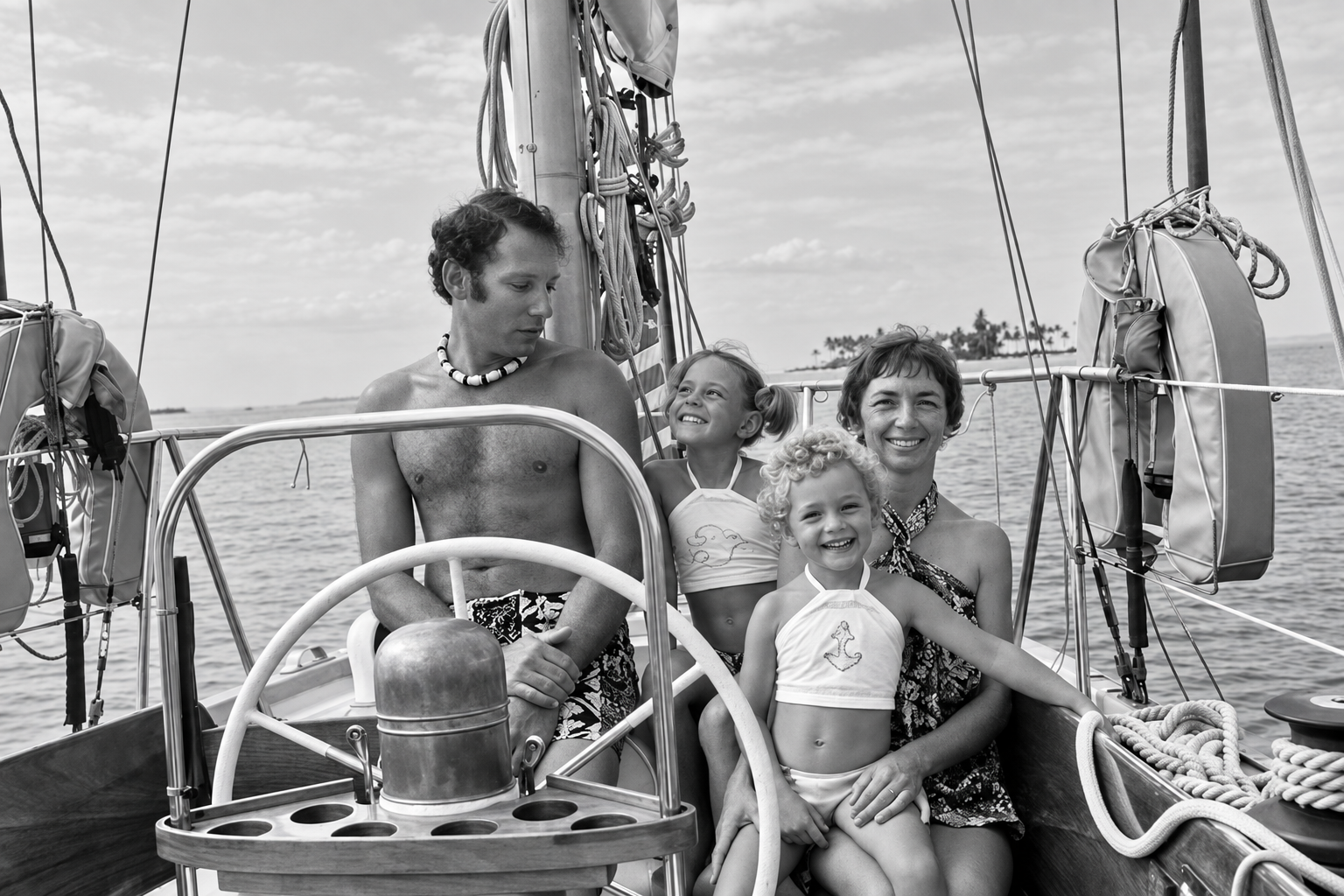
That experience eventually influenced Intermezzo II, then the Deerfoot and Sundeer series, and later Beowulf. The ideas were not coming only from theory; problems they lived with on one boat could become lessons for the next one.
Cruisers first
There is a quote from Steve Dashew that explains a lot of the philosophy behind the boats. He described himself and Linda as “cruisers first, designers and builders second.”
That changes the starting point completely. They were not designing around a market segment or whatever happened to be fashionable at the time, they were designing around how they themselves wanted to travel and cross oceans.
The earlier Deerfoot and Sundeer sailing yachts followed that thinking. They were long and relatively narrow, but more importantly, boats of that size were still being developed around the reality of a couple using them. Beowulf, their 78-foot water-ballasted ketch, pushed that idea further, and Steve and Linda regularly sailed her as a two-person crew while achieving very high daily passage distances in the right conditions.
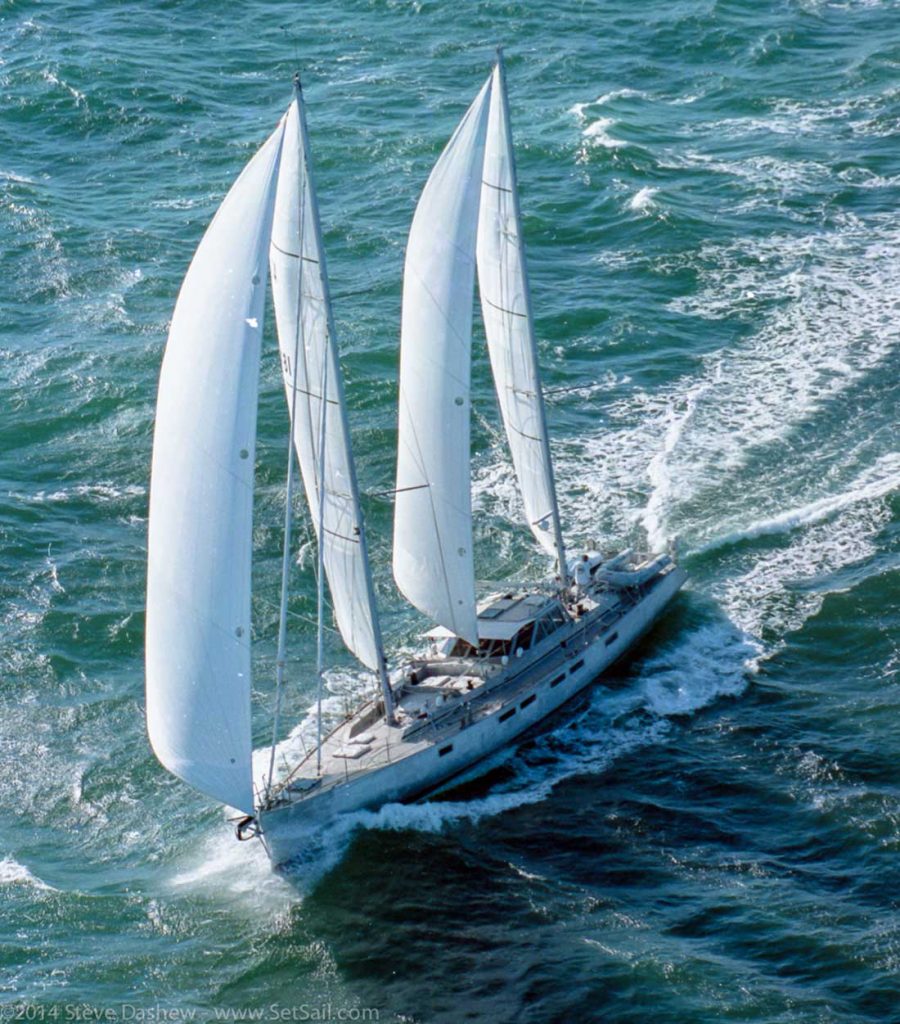
Later, when operating a large and powerful sailing yacht became more physically demanding, the question changed: could the same thinking work in a powerboat?
Instead of moving to a conventional motor yacht, they developed something that kept much of what they valued from sailing. That became Wind Horse, the first FPB, and the sailing background is still visible in the result... not because the boat looks like a sailing yacht, but because the same questions about passage-making and actually living with a boat followed them into the powerboat designs.
Ugly Betty
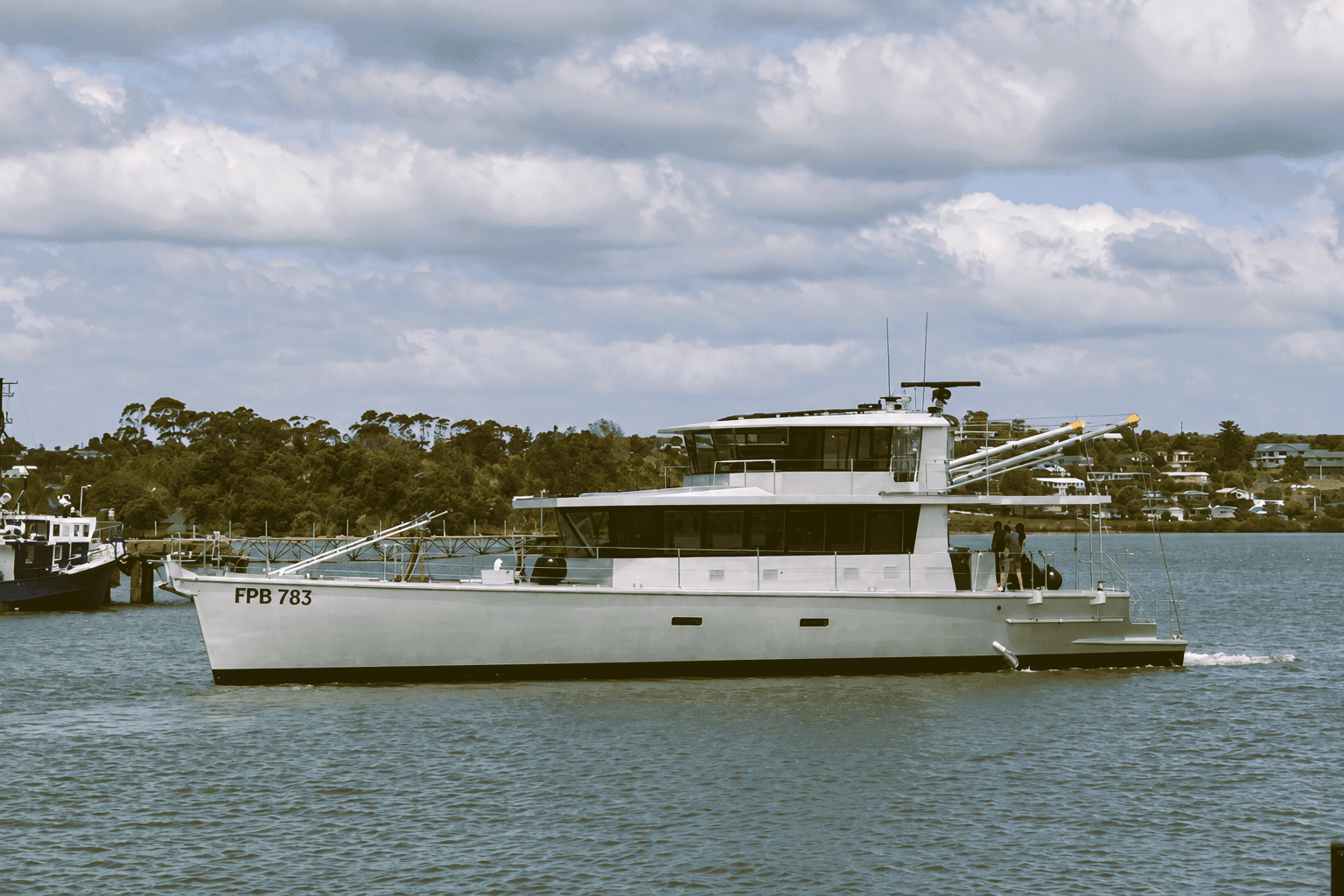
Ugly Betty is the third and final FPB 78. She was designed by Steve Dashew and built by Circa Marine in New Zealand, with only three FPB 78s built: Cochise, Grey Wolf II and Ugly Betty.
The model name says 78, but she is actually about 86 feet overall, with a waterline length of roughly 25.4 metres and a beam of only around 6.1 metres. That beam is quite something compared with many modern motor yachts of a similar length, and once I noticed it the rest of the proportions started making more sense.
Berthon lists the FPB 78 at around 11 knots cruising speed, with approximately 4,500 nautical miles of range at 11 knots and around 6,500 nautical miles at 10 knots. Current information for Ugly Betty gives similar figures. At that point the proportions stop being only numbers, because this is a yacht able to cover serious distances and remain independent for long periods.
Ugly Betty has also travelled to places including Greenland, Antarctica, the Northwest Passage, Alaska and Patagonia. That makes the expedition capability much more meaningful to me because it is not only part of the image around the yacht... the boat has actually been used that way.
A different idea of luxury
I am not against luxury at all. This is yacht design, so of course comfort and quality matter, but with the FPBs they do not seem to be where the design starts.
The yacht feels as though it starts with spending time at sea and then asks what is needed to make that life comfortable. The FPB 78 still has proper cabins and comfortable living spaces, and it can be operated by a couple while keeping separate crew accommodation if needed, so this is definitely not a stripped-out working boat.
But it still feels like a boat first.
The hull and proportions
The narrow beam explains a lot once you start following what it does through the yacht. Reducing resistance is part of the reason for it, but the accommodation now has less width to work with as well, and suddenly a dimension chosen partly for performance starts influencing how the inside of the boat can be arranged.
The long waterline sits inside the same idea. On a yacht intended to cover large distances at moderate speeds, length and beam work together, and the range figures begin to look less surprising.
Then weight becomes part of it as well, which is where aluminium starts making sense beyond simply being the material used for the hull. One decision keeps affecting another... exactly the part of yacht design I enjoy.
The hull form was also developed to behave safely in difficult following seas, particularly to reduce the bow-steering behaviour that can lead to broaching, and FPB 78s have demonstrated controlled surfing at speeds well above their normal cruising speed.
Bare aluminium
I also really like the unpainted aluminium. It gives the boat an industrial, almost workboat appearance beside the perfectly faired and painted surfaces of most modern luxury yachts, but leaving the material exposed is practical as well.
A yacht spending long periods away from major yards does not really need another perfect finish to maintain. Bare aluminium removes much of that work, while damage or corrosion is easier to see instead of sitting underneath a coating system.
Once you start looking at the boat from that point of view, the same thinking appears elsewhere. Machinery needs to remain accessible because somebody eventually has to fix it, and being away from normal support changes what needs to be carried on board.
When the destination might be Greenland or Antarctica, practical decisions like these stop feeling secondary.
Designed for a small crew
Operating a yacht this size with very few people is another part of the Dashews’ thinking that keeps coming up. It was already there in the sailing yachts and continued into the FPBs.
An 80-foot yacht designed around two people is a much bigger problem than simply removing crew cabins. Someone still has to keep watch, manoeuvre the yacht and deal with whatever needs attention below deck... so visibility and machinery access start affecting the layout from the beginning.
Even small inconveniences become different when two people have to live with them every day for months.
Steve Dashew also placed a lot of importance on passage speed, not simply because going faster is enjoyable. A higher average speed can reduce the time spent exposed to weather and give the crew more choices when planning a route, so performance again comes back to how the boat is actually used.
Why I like this approach
What I like most about Steve Dashew’s work is that I rarely have to guess what the boat is supposed to do. Once that purpose is clear, many of the decisions around it become easier to understand.
I definitely do not think every yacht should look like an FPB, and I would not want that either. I love the beautiful side of yacht design just as much, but these boats keep pulling me back to one very simple question...
What is this boat actually supposed to do?
I am still developing my own approach to explorer yachts, and there is a lot I want to understand, but starting there makes sense to me. Understand how the vessel will really be used first, then let the design grow from that.
References
- https://soundingsonline.com/news/a-journey-ends/
- https://www.berthoninternational.com/berthon-blog/before-the-fpb-fleet-there-were-muffler-men/
- https://goodoldboat.com/wp-content/uploads/GOBMagazine/gob24may02.pdf
- https://www.practical-sailor.com/sailboat-reviews/deerfoot-61/
- https://www.berthoninternational.com/publications/berthon-lifestyle-magazine-2012-viii.pdf
- https://www.buzzsprout.com/2528535/episodes/17988770-5-from-beowulf-to-wind-horse-steve-dashew-on-the-birth-of-fpb-explorer-yachts-berthon-international-yacht-brokerage
- https://www.yachtingmagazine.com/transpacific-shakedown-0/
- https://www.berthoninternational.com/yacht-sales-brokerage/fpb-motor-yachts/fpb-78/
- https://www.fraseryachts.com/en/yacht-for-sale/ugly-betty/
- https://www.fraseryachts.com/en/news-detail/ugly-betty-is-now-for-sale/